

"How does the system view us? Are we appreciated?"
There is a significant gap in the labor market participation between foreign-born women and both native-born women and foreign-born men. Women born outside Europe, who have come to Sweden as refugees or family migrants, are particularly vulnerable. They face discrimination, difficult processes with authorities, and society prioritises efforts for foreign-born men, making these women even more vulnerable and dependent on their husbands to live and stay in Sweden.
During a seminar focused on gender-equal integration and foreign-born women's participation in the labour market, various social actors from the Nordic countries gathered to exchange expertise and experiences.
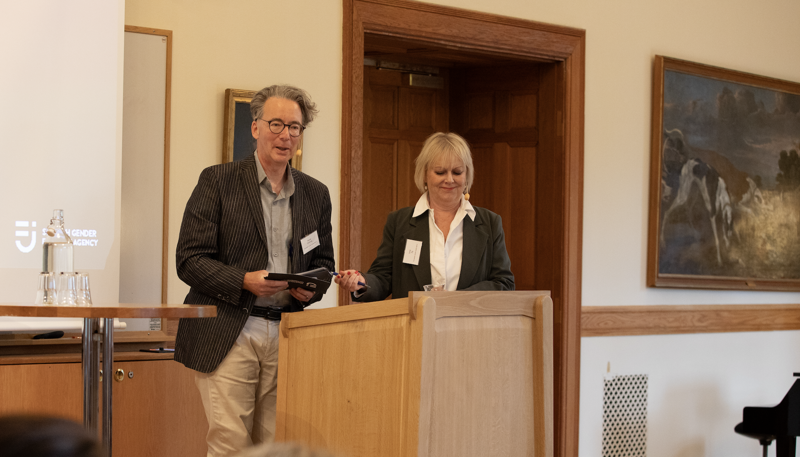
Martin Andreasson, state secretary to the Minister for Gender Equality Paulina Brandberg, opened by saying that economic gender equality is a priority for the Swedish government, not least because it is a factor for economic growth.
He highlighted the need for increased female entrepreneurship, which has only grown by 3 percent in Sweden over 42 years, from 25 to 28 percent. Martin emphasised that both the business sector and politics play crucial roles in accelerating this development.
The unemployment rate among foreign-born women in Sweden was 13 percent in 2023, compared to 2.4 percent among native-born women. However, not all groups of foreign-born women are far from the labour market; this primarily applies to women born outside Europe who are refugees or family migrants.
Ha din väska packad, men integrera! Det gör någonting med kvinnornas välmående
Bosse Parbring participated with a presentation from the Swedish Gender Equality Agency, stressing the importance of collaboration to solve complex social challenges. He shared a government mission that the agency is working on with the Public Employment Service, the Migration Agency, the Social Insurance Agency, and the National Board of Health and Welfare to remove barriers for foreign-born women far from the labor market.
There was a need for a study focusing on the women's perspectives, so the authorities set up focus groups with women far from the labor market, resulting in a joint agency plan to facilitate their situation.
Bosse reports that many in the diverse focus groups of 70 women from 28 countries share similar experiences:
– Despite many efforts to integrate and establish themselves in the labor market, many feel a loss of personal agency after a few years in Sweden. The lack of both social and professional networks creates isolation, worsening their situation, says Bosse.
Other complicating factors include:
-
Women take on the majority of unpaid household and care work.
-
Distrust of childcare services affects the willingness to leave children.
-
Insecure jobs make it difficult to take sick leave without losing employment.
-
Strained family situations when power dynamics change at home.
Structural discrimination is a major barrier to employment
Majority society’s attitudes towards different groups of foreign-born women counteract their participation and inclusion.
– The hierarchical ethnic relations in Sweden create social exclusion and marginalisation, likely one of the most important reasons why foreign-born women are excluded from the labor market, says Bosse.
Most in the focus groups had applied for numerous jobs without being called for an interview. Studies show that a person with an Arabic-sounding name has much less chance of being called for an interview.
Selected quotes from focus groups:
In labour market measures:
”A friend applied for a job, her name is Helena, and the boss thought she was Swedish. She said yes over the phone because she thought she was Swedish, but then when she saw her, she said no.” (Ama, 33) (Eisha, 27)
In media:
"How does the system see us? Are we appreciated? Media describes us as oppressed, staying home, having children, with no ambitions, poorly educated." (Shane 41)
At SFI (Swedish for Immigrants):
"The teacher asked me, what are you doing at SFI at your age? It’s pointless for you… everyone laughed… I didn’t go back." (Paula, 39)
At the employment service:
"This is useless, said the case officer at the Employment Service and tore up my university diploma from Baghdad."
Many women testified that society focuses on what they can’t do rather than what they can. Even highly educated women experience this, expending much energy processing experiences of degrading treatment from authorities. Women with academic degrees reported downward social mobility and a devaluation of their education from their home countries.
"My university classmates said: – How can you know so much, having been educated in Chile?" (Miriam, 36)
Being sent around in the system leads to mistrust
A positive approach that focuses on the women's own abilities leads to increased confidence and resilience. The women often expressed a feeling of incomprehension about what is required of them by authorities and employers, and that no matter what they do, it is never enough.
"I feel like a circle, going round and round but getting nowhere." (Fadime, 45)
The feeling of being sent around between different authorities but never getting anywhere was shared by Brakissa Soumahoro, a seminar participant. She said it was only when she discovered Etableringslyftet that she moved forward. She felt it saved her life as she was feeling very unwell before.
Etableringslyftet has been around for five years and is funded until 2025. They work extensively with women who have little to no education, and these women can participate in their native language.
– Women suffer more. They don’t get as much employment assistance as men. The focus is more on what they lack rather than the strengths they bring, says Annika Nordgren, project leader at Etableringslyftet.
When women have contact with authorities, it is often that one decision depends on other decisions made earlier, which means a lot can go wrong along the way. This creates distrust among the women. Another challenge is adapting to an individualistic society when they come from more collectivist cultures.
– You have to understand their perspective to overcome challenges. We look at Swedish society through the eyes of our participants, says Annika.
With well-being in vocus – Labour market measures are not enough
Maria Holm Baekgaard from the Red Cross in Denmark mentioned temporary residence permits as a barrier to integration, sending a destructive signal from society:
– Have your bag packed, but integrate! It affects the well-being of women, says Maria.
The Red Cross focuses on all aspects of life in its integration work. Maria mentioned an initiative where participants' well-being was at the center, not their labour market status. The women led the content based on how they felt and spoke in their own language. All participants eventually ended up in some form of employment.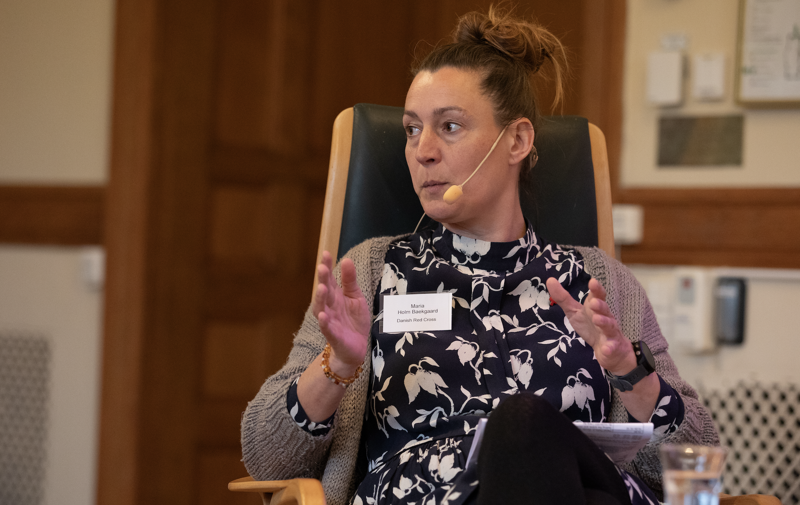
– You need a holistic approach, not just looking at the labour market. Be an active citizen in your neighbourhood too. When you focus on well-being first, the rest follows. You enter a positive spiral that lifts you, otherwise you might end up in a negative spiral, she said.
Several panelists also highlighted the need to include men in integration work beyond labor market measures.
– We forget men, but we expect things from them too that are not labor market-oriented. Maybe they need to learn cooking, cleaning, childcare. If we lift women and not men, families fall apart, says Maria.
She also advised trying new things and initiating collaborations to develop integration work.
Women fly under the radar
Many women have come to Sweden as family migrants. They get their papers through the embassy and are not included in an establishment program, but they are entitled to register with the Employment Service and SFI (Swedish for Immigrants), something only 20-30 percent do.
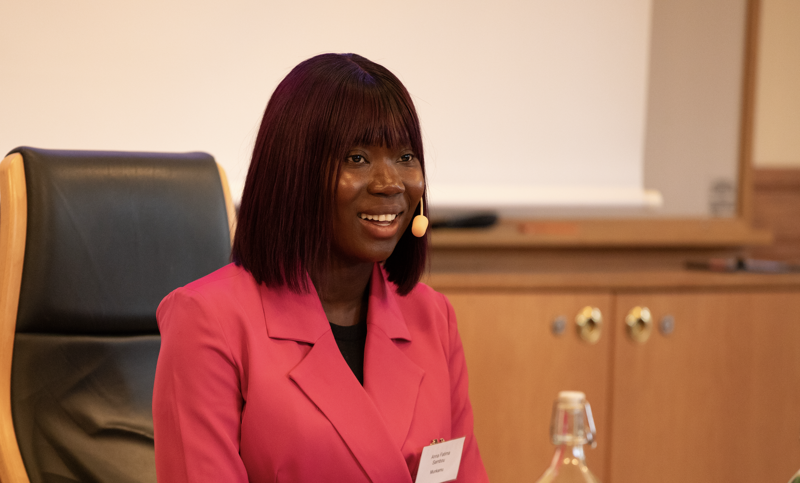
Anna Fatima Sambou, an entrepreneur in Finland, came to Finland to study a master’s program and was also not included in any integration program. She describes the challenges she faced on her journey to then start a business in the country. Besides traditional challenges such as coming up with a good business idea, launching, and growing the company, she faced challenges in the form of language barriers, cultural challenges, but above all, obtaining financing.
Her advice to women is to embrace what makes you unique and use it to your advantage. And to believe in yourself. She also encourages investors to dare to invest in foreign-born women.
– It’s not just a social issue; it’s a way to harness talent. It’s about seizing opportunities in the global business system ecosystem, she said.
Publication date: 17 June 2024
Last updated: 21 August 2024