

Sub-goal 4: Equal distribution of unpaid housework and care work
Women take on a large share of unpaid domestic and care work. They take more parental leave and spend more time caring for children. Women also provide more extensive care for older people and other relatives than men.
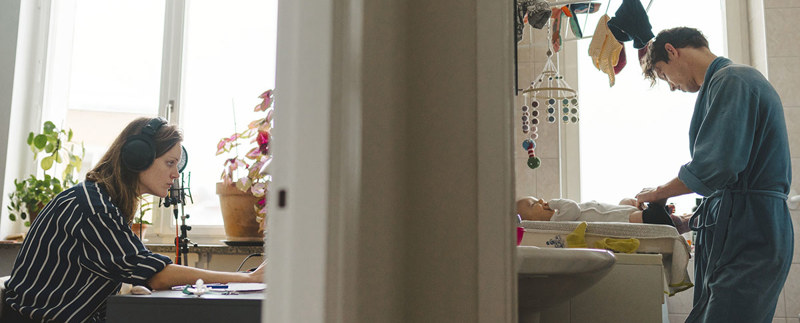
The goal is to achieve an equal distribution of unpaid domestic and care work. Women and men should have the same responsibility for domestic work and have equal opportunities to provide and receive care.
Why is it important to distribute work equally within the home and family?
An equal distribution of unpaid domestic work and care for another person is about giving women and men the same opportunities in society. Among other things, it provides equal opportunities to maintain social contacts, develop in the labour market and pursue voluntary or political engagement in their free time.
The opportunity to combine paid work with family life and maintain relationships with relatives has long been central to Swedish gender equality policy. The Government has noted that an unequal distribution of work has had a more negative impact on women in the labour market and that women experience poorer health than men.
An equal distribution of work does not mean that women and men must divide all tasks and activities equally between them. By distributing the overall amount of work equally within households and at societal level, women and men can have equal opportunities to combine paid work with having a family and maintaining relationships.
Women do more unpaid domestic work
Women and men spend approximately the same amount of time working each day, but on different types of work. On average, women spend more time on unpaid domestic and care work, while men spend more time in paid employment. Women generally spend more time cooking, cleaning and doing laundry, and spend more time caring for their own children. These are activities that take place every day and require a considerable amount of time.
Men, on the other hand, spend more time in paid employment and on maintaining and repairing the home and vehicles. Similar patterns have been identified by Statistics Sweden (SCB) in previous time-use surveys. Many household activities, such as shopping and gardening, are carried out to a similar extent by women and men. The same applies to activities such as helping children with homework, playing with them and attending their activities.
Overall, the assessment is that the time men spend on maintenance and repairs does not correspond to the amount of time women spend on domestic work. Women therefore perform more unpaid domestic work than men.
Even in relatively gender-equal families, it is often the woman who takes overall responsibility for family life, particularly as children get older and the logistics around schedules, leisure activities and so on increase. This so-called project management is another form of invisible work that creates a mental burden and can lead to stress and ill health.
Major differences in the uses of parental leave
As a measure to reduce differences between women and men, the main focus has been on the parental insurance system. Today, 90 days of parental leave are reserved for each parent. Men, however, still take less parental leave than women and continue to use the parental insurance system to a lesser extent. Women take 69 per cent of parental leave days.
Looking at the use of parental benefit during the child's first two years, the differences between women and men are even greater. For children born in 2022, mothers took 73 per cent of parental benefit days, while fathers took 27 per cent.
There are also differences between different groups. The men who share parental leave most equally are highly educated men with a good income, who were born in Sweden, are over 25 and work in the public sector. Men's use of parental leave has increased over time, while women's has decreased, where women have the opportunity to do so. Single women with low levels of education and income often take all the parental leave days during their child's first year.

Women also take more temporary parental leave to care for sick children (vab) than men. They account for 63 per cent of temporary parental benefit, while men account for 37 per cent.
Men also use temporary parental benefit (vab) to a lesser extent than women. In addition to women using parental benefit more than men, they are also on parental leave for longer. This is because women are more likely than men to spread their parental benefit days over a longer period and take unpaid leave instead. This is also affected by the rules governing parental insurance. In practice, mothers and fathers have different conditions for taking parental leave because the rules differ during the periods when women and men choose to take leave.
Care work affects women's health
Almost one fifth of the population regularly provides care for a relative. Unpaid care for older or sick relatives or a child with a disability is relatively evenly distributed between women and men, but there are differences in the extent and type of care provided. Women are more likely to take overall responsibility for social contact and supervision, while men tend to provide more practical, specific forms of assistance.
Women who provide extensive care also experience poorer health, as it affects their social lives, finances and health. More older women than men care for their partners and are at risk of experiencing involuntary loneliness.
...and economy
Paid and unpaid care work affect one another. Women are more likely than men to work part-time in order to care for children and older people. Both women and men try to reduce the amount of time younger children spend in preschool, but unlike men, women experience more stress in trying to do so. If elderly care services are cut back, unpaid care work is likely to increase. The amount of domestic work is also affected for people who are only offered part-time employment.
The RUT tax deduction has increased both women's and men's participation in the labour market by reducing the time spent on cleaning and other domestic work. However, the effects of the RUT deduction on the distribution of unpaid domestic and care work and on economic equality remain unclear.
The revised care allowance for children with disabilities has so far had only a marginal effect on the distribution of care for children with disabilities. The benefit for people caring for a seriously ill relative (närståendepenning) is still used primarily by women.
What is needed for a more even distribution of unpaid housework and care work?
Publication date: 7 January 2022
Last updated: 15 August 2026